

This is part 1 of 7 in Symbols of the Sanctuary, a series on the carvings, furnishings, and symbols of Epiphany’s church.
Every symbol in this sanctuary is here on purpose. The oak carvings were produced by Ole Sunde, a Norwegian immigrant, and nothing in this room was placed casually. The whole space is designed so that even when the sermon wanders, the eyes and imagination of the worshiper are drawn back to the kingdom of God. Symbols are the language of the sacred, older than words, deeper than argument.
The Ambo
The ambo replaces the old pulpit-and-lectern arrangement. Where a pulpit elevated the preacher above the reader of lessons, the ambo declares that all words spoken in this space are equal before God. There is no hierarchy of holiness here. The ambo is beautifully carved with six symbols that speak to what we believe about Jesus and the life we are called to live.
Six Carved Symbols
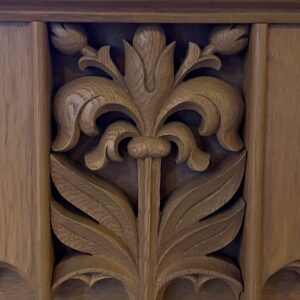
- The Lily: The lily represents the human Jesus, born of a real mother, Mary. It is the flower of the Annunciation and of human dignity. The lily has been associated with Mary since the early church as a symbol of purity and incarnation.
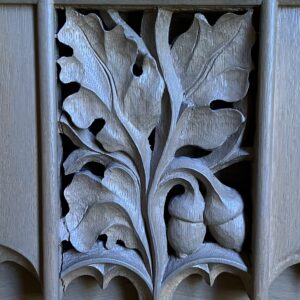
- The Oak with Acorns: The oak stands for power, strength, and supernatural ability. In Scripture, great theophanies often occur near oaks, from Abraham’s oak at Mamre (Genesis 18) to the tradition of the Gospel spreading under oak groves. The acorn reminds us that enormous strength grows from small beginnings.
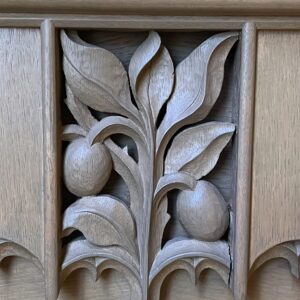
- The Olive Branch: The olive branch was carried by the dove after the flood, signaling to Noah that the waters had receded and salvation had come (Genesis 8:11). It also represents olive oil used in anointing, the oil of healing and consecration that runs through both Testaments.
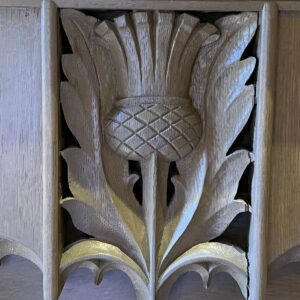
- The Scottish Thistle: The thistle represents sin that is overcome by the preaching of the Gospel of Jesus Christ. It is a thistle of the Scottish tradition, a reminder of our Anglican heritage and of the thorny difficulty of the human condition, which the Word of God cuts through.
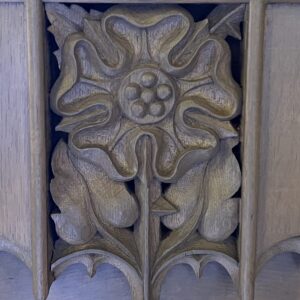
- The Tudor Rose: The Tudor Rose is emblematic of our Anglican tradition and represents messianic hope. The rose appears across Anglican churches as a sign of the English Reformation and the flowering of the Gospel in a new form. It points toward the coming reign of Christ.
- Wheat: Wheat represents the bounty of God’s abundant love for each one of us. Jesus himself is the Bread of Life (John 6:35), and the wheat we see here anticipates the altar and the eucharistic feast we share every Sunday.
The Baptismal Font
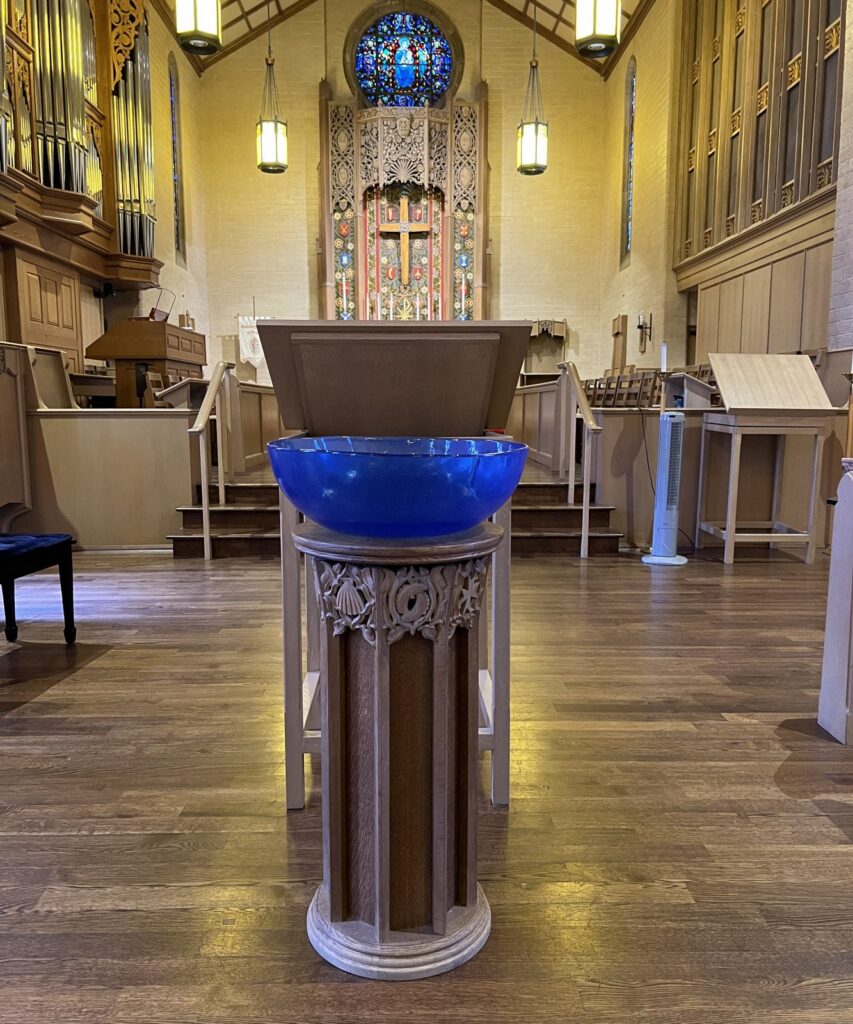
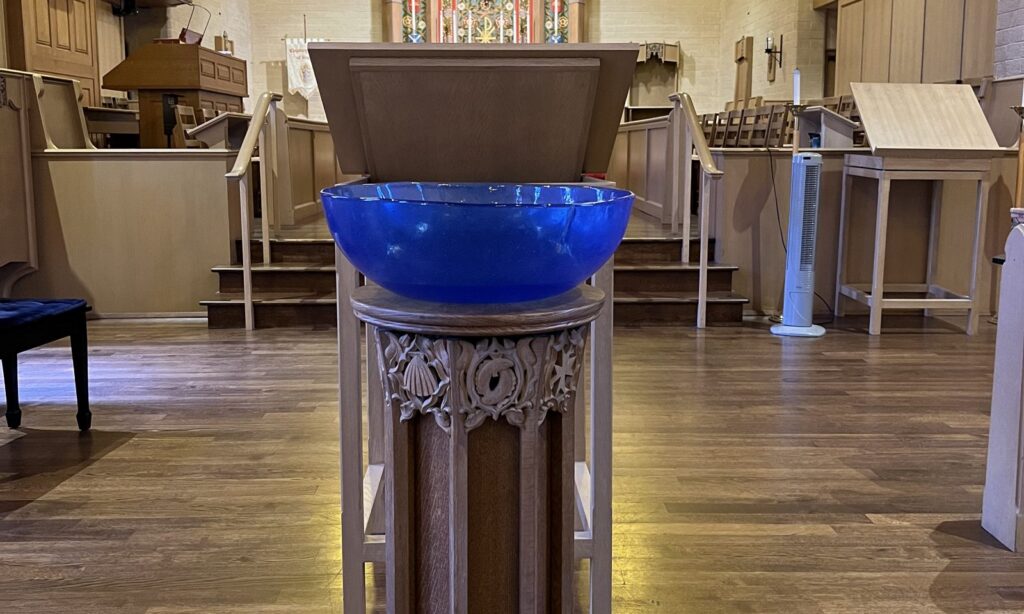
The font was redesigned in the 2015-16 renovation. The base came from the original small font that was attached to the wall. Now the font is movable, carried into the chancel four times a year: the Baptism of Jesus in January, the Great Vigil of Easter, All Saints Day in November, and Pentecost. The base carries four symbols, each carved twice, and has a blue, blown-glass bowl set on top representing the kingdom of heaven. Blue is the color of the sacred throughout this sanctuary.
Four Carved Symbols
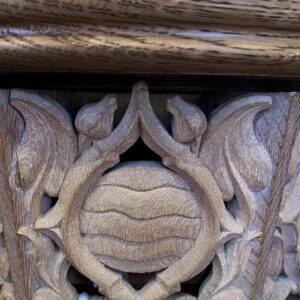
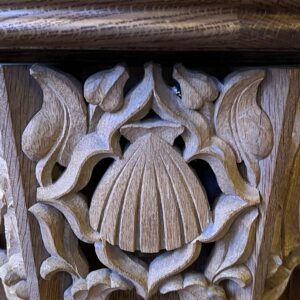
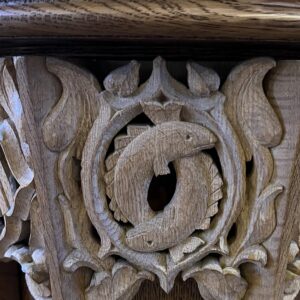
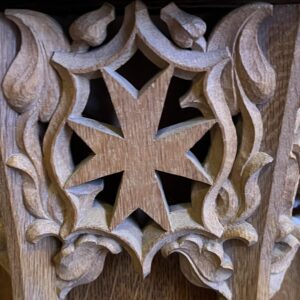
- Water: The carved water waves represent purity and cleansing. Baptism is the sacrament of new birth, the washing away of all that separates us from God. “Unless one is born of water and the Spirit, he cannot enter the kingdom of God” (John 3:5).
- The Shell: The scallop shell has been used since the early church as the instrument of baptism, the vessel from which water is poured over the person being baptized. It is also the symbol of Saint James the Greater and the Camino pilgrimage, reminding us that baptism begins a journey.
- Two Fish: The two fish carry double meaning. They recall the feeding of the five thousand (Matthew 14), where five loaves and two fish fed a multitude, a foretaste of eucharistic abundance. They also point to Jesus’s call to his disciples to become fishers of people (Matthew 4:19), gathering all into the kingdom of God.
- The Maltese Cross with Eight Points: The Maltese Cross has two points at each arm of the cross, yielding eight points in all. These eight points represent the eight Beatitudes that Jesus taught from the hillside overlooking the Sea of Galilee (Matthew 5:3-10). Baptism initiates us into that Beatitude life.
Adapted from Symbols of the Sanctuary, a lecture guide by the Rev. Doyt Conn, Rector.